| Landscape Architecture
Getting Your Hands Dirty
Knowledge of Soil Science (aka PEDOLOGY) is an important component in a landscape architect’s tool kit of technical skills. Understanding soil properties (texture, structure, pH, nutrients, drainage) helps landscape architects appraise the growing conditions on a project site, enabling them to select appropriate plant species, thereby preventing plant stress, disease and failure.
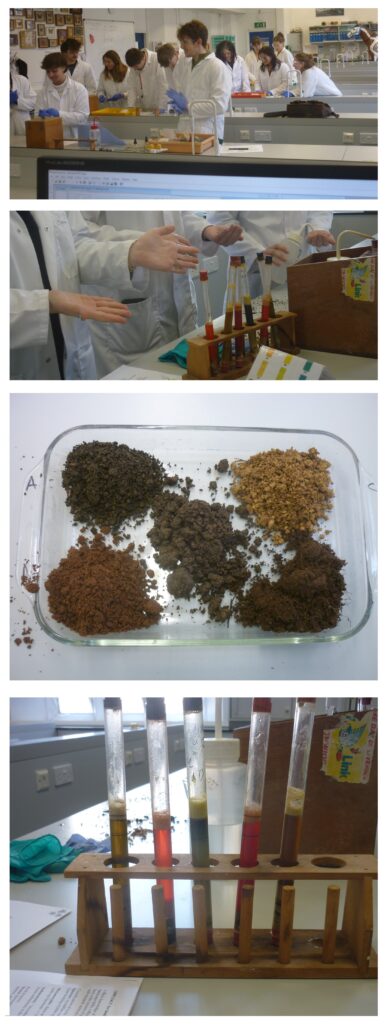
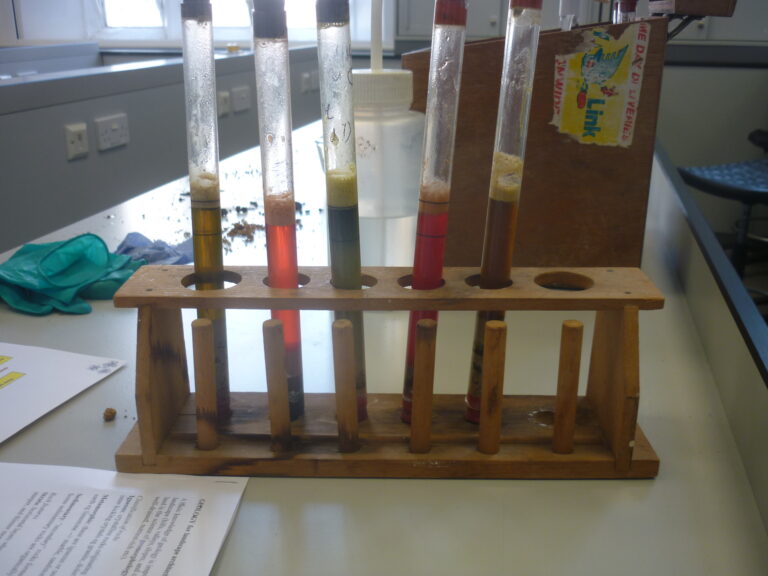
This week’s Appraising Landscapes session was held in our School’s science laboratory. Initially there was a rock identification practical followed by soil testing for texture and (acid) reaction (pH). The field texture test involved rolling a sample round in your hands to determine how gritty, sticky or soapy it felt (equating to sandy, clayey and silty soils). The pH test used a BDH kit which relies on an indicator dye that changes colour depending on the acidity or alkalinity of a soil solution.
Certain plants (eg lavendar) prefer free-draining conditions so a sandy loam is best for them. Some plants prefer acidic soils eg heathers so a peaty substrate is ideal. Each plant has its own preference and tolerance levels.