| History
the 85th Anniversary of Cheltenham’s deadliest bombing raids
This post comes from postgraduate History student David Morgan. David also works at the Holst Victorian House in Cheltenham, and is on the committee of the Gloucestershire branch of the Historical Association. The following story featured on a report by ITV News, which can be seen here.
The 11 December 2025 marked the 85th anniversary of Cheltenham’s deadliest bombing raid of the Second World War. As many in the town were sitting down for their tea, on the other side of the English Channel in Orleans, France, Junkers 88 long-range bombers from the I and III groups were preparing a mission which would change the Cheltenham landscape forever. The twin-engined aircraft soon arrived above English soil at Weymouth, before following the path of the Bristol Channel and arriving in the skies above Gloucestershire at about 19:40. What ensued was a night many residents could never forget.
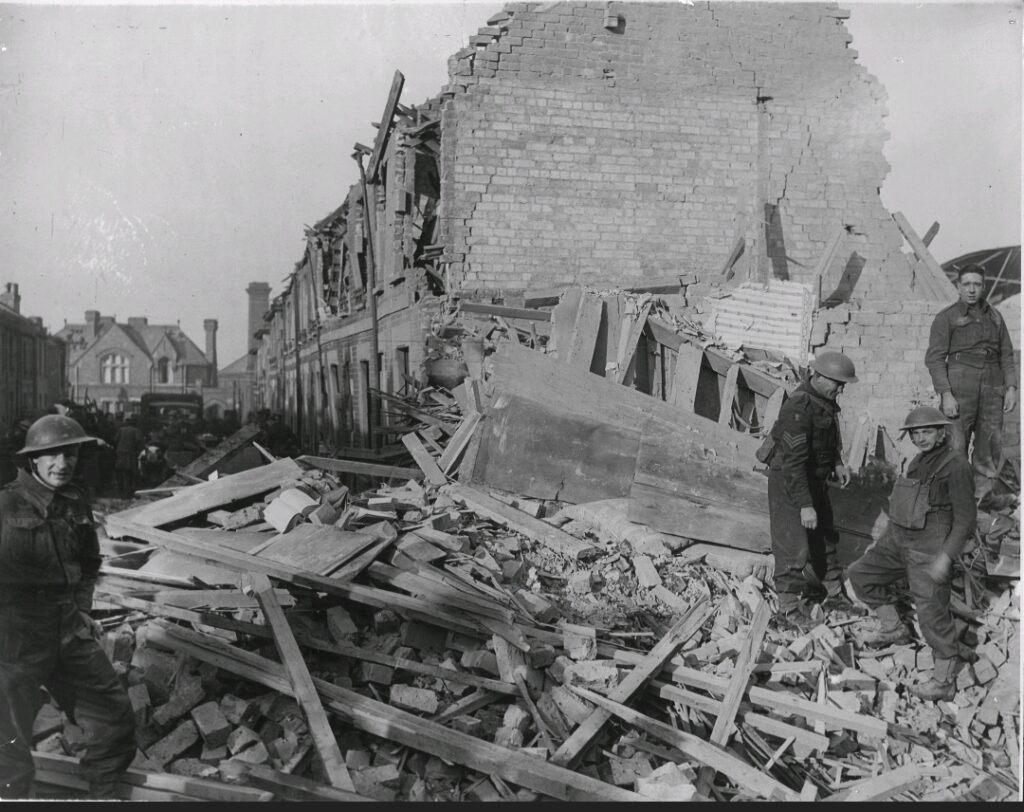
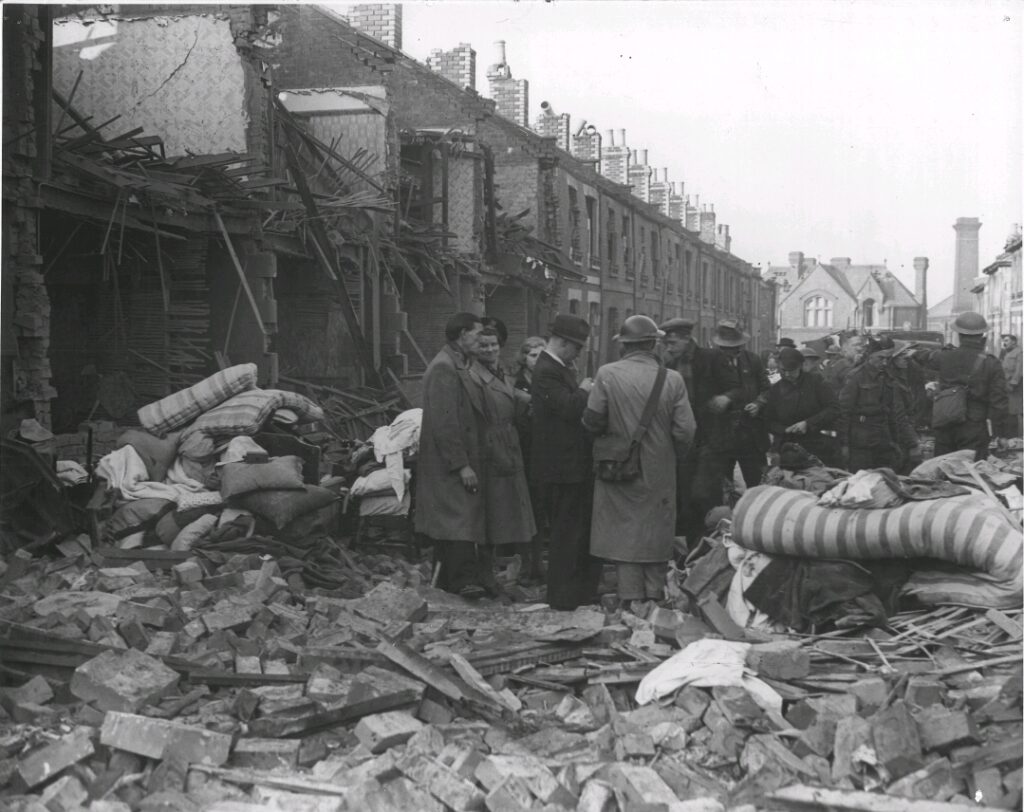
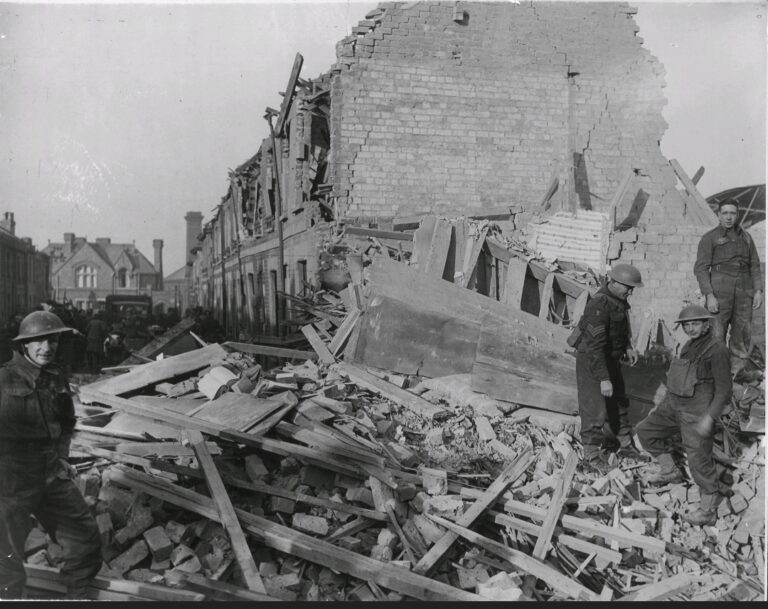
Images 1 and 2- Yvonne’s house can be seen at the back of the images taken in the aftermath of the bombing showing ARP wardens and volunteers searching through the rubble.
In just over four hours, 2000 incendiary bombs and 150 high explosive bombs rained down on a town which on the face of it appeared to have little direct involvement in the conflict in late 1940. That night 23 people were killed, many more were injured and 600 were made homeless, with many more temporarily displaced. Many local schools and community spaces acted as refuges for terrified residents. Though not all the bombs which fell that night exploded, although many of them did cause extensive damage including Fullwood Lodge on the site of Park campus, Lansdowne, the manor at Shurdington and the railway station. Notably, one bomb hit Pilley Bridge in Leckhampton damaging the railway beneath, with a local resident recalling how they saw the bomb cut straight through the structure before exploding on the line below. This was one of the last bridges to be repaired after the war. The delay was due to a dispute between the railways and local council over whose responsibility it was to repair the damage.
As the number of people with first hand experience of the Second World War decreases, it is becoming more important than ever to share the stories of those who are left. Yvonne Ebdon, now 97, remembers the deafening roar of the explosions and the feel of the earth shake as, Frisco, her little cocker spaniel shivered on her lap, whilst her family hid in the damp air raid shelter on the site of Cheltenham and District Gas Company, where her father worked. It was a few hours into the raid when a local Air Raid Warden came into the shelter and spoke to her father, before he turned to his wife and whispered ‘I’ve got to go’, a statement to which Yvonne’s nervous mother replied, ‘what? Where are you going in the middle of an air raid?’ It was Yvonne’s father’s job to oversee the containment of the gas and subsequent repair of the line which had been severely damaged following the bombing of Pilley bridge.
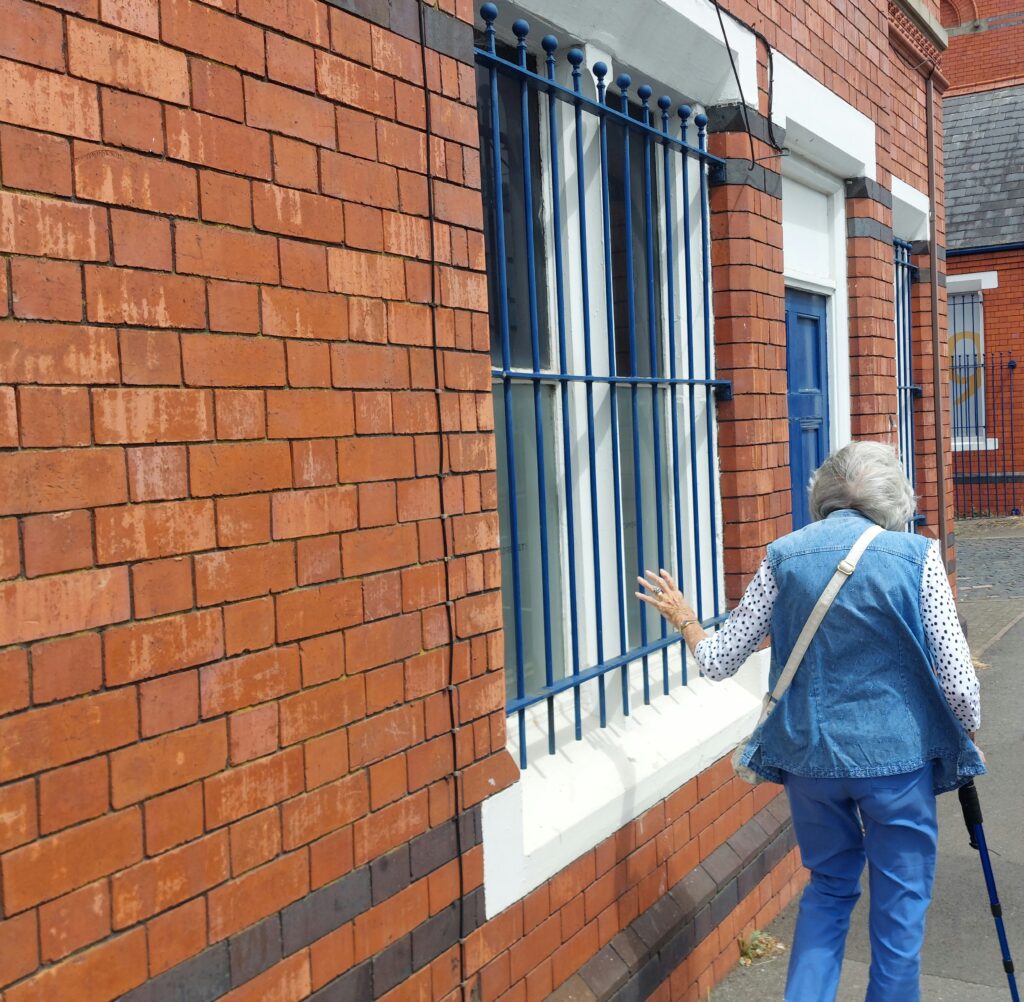
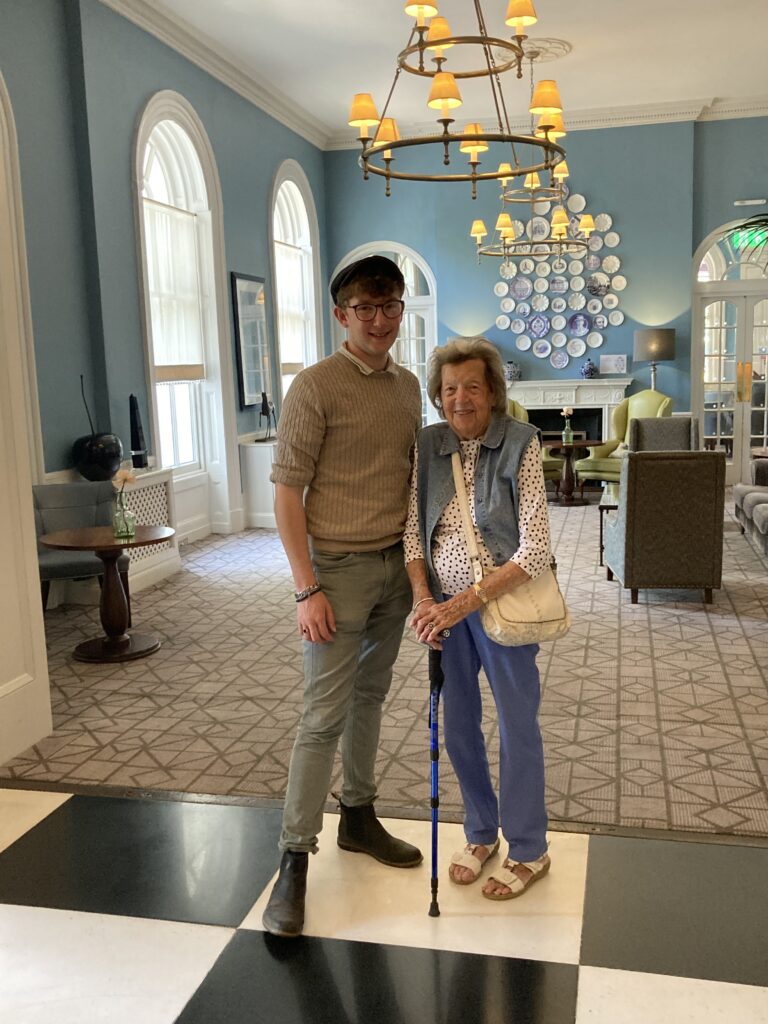
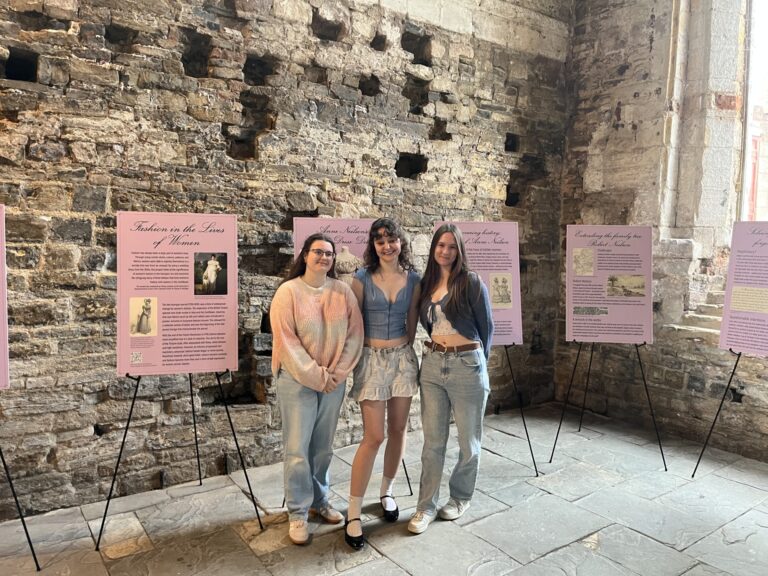
Images 3 and 4 – Yvonne visited her childhood home for the first time in almost 75 years in June as part of a tour of Cheltenham which saw her visit many of the sites which punctuated her wartime story, including the town hall where she danced with American soldiers and the Queens Hotel where she volunteered. David pictured with Yvonne (right).
Once the all-clear was sounded around midnight the frightened family soon emerged to a sight which no child wanted to see. A bomb had fallen just a few hundred feet away from their home blowing out the windows and door covering their house with glass and debris. Yvonne recalls that the general mood in the town was one of shock and sadness. That night she stayed with her grandmother, who was licensee for a pub in town, before returning to their home the next day to find glass strewn throughout the bedrooms. Yvonne still remembers the tears of her mother as they carefully made their way through their home, and Christmas cheer replaced by the site of roof tiles in the bedrooms. This single bomb, which was aiming for the railway line between Bristol and Birmingham, ultimately claimed 10 lives including an 11 year old boy, in a house which was never rebuilt.
Yvonne’s childhood home is now the site of the vets beside Tesco on Gloucester Road. She recalls being alongside her father watching the sky light up as the Germans dropped bombs across the town. Another resident who remembers that night is Gordon Davis, 88. Despite not being overly aware of the war at the time, he recalls the flames following the bomb which hit the gasworks. Other residents remember a mushroom shaped cloud shooting up into the sky as a result of the same explosion. Another resident who lived at 24 Stoneville Street and born in 1938, often recalled that her mum and their neighbour took turns to return to the house from the shelter to make hot chocolate for everyone. It was the neighbour’s turn on the night of the 11 December. Sadly, she remembered that the neighbour was one of those killed that night.
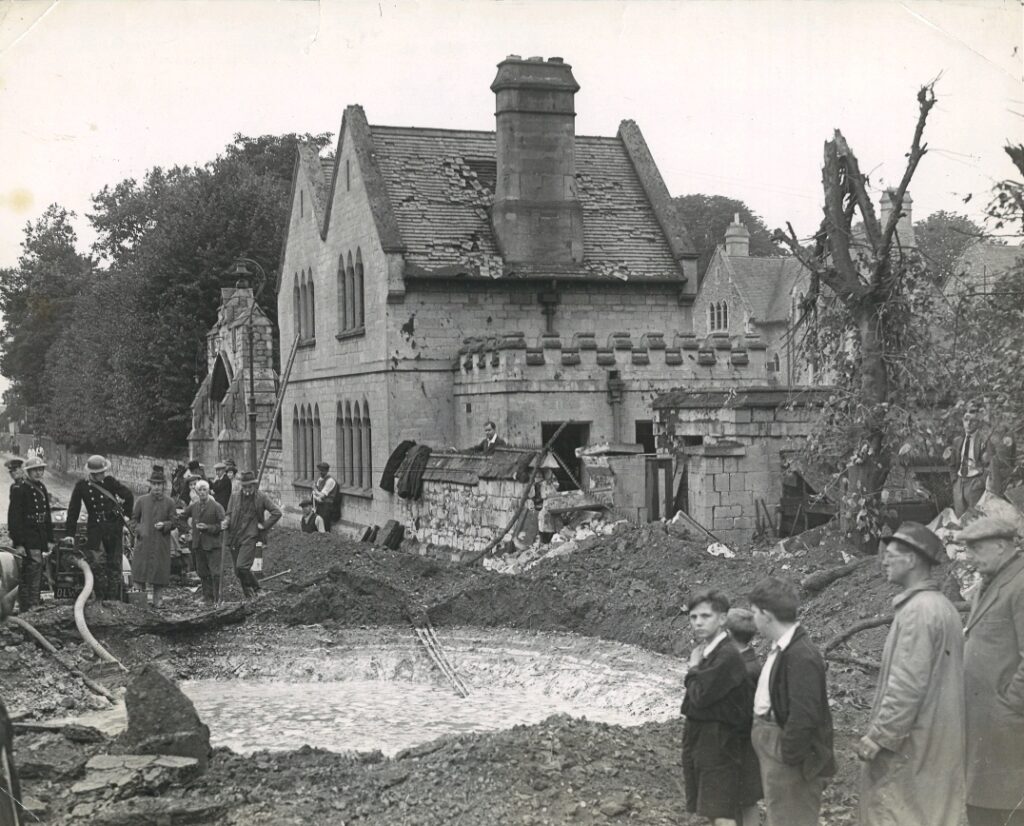
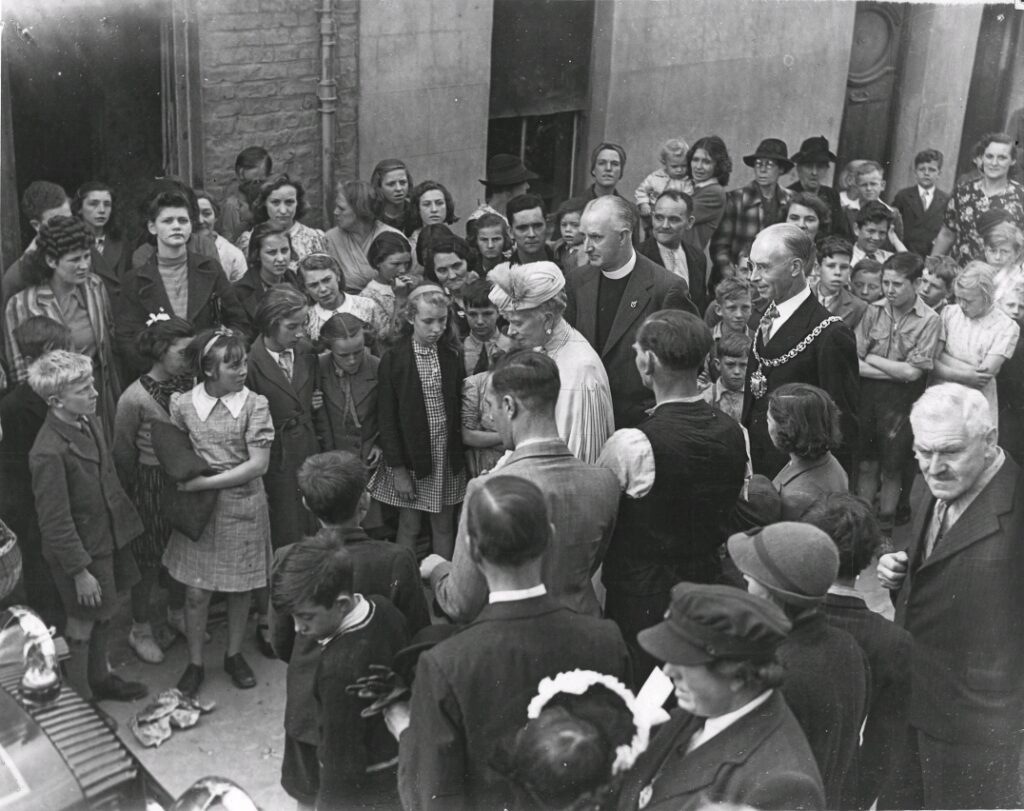
Images 5 and 6 – Cheltenham was also bombed on 27 July 1942 when four bombs fell on St Paul’s, including one just outside the gate to FCH on Swindon Road (left), this raid also claimed lives and the residents were visited by Queen Mary in the aftermath (right).
As a suburban town with seemingly little direct involvement in the war effort it was difficult for me to understand why the town was targeted so heavily that night. A few suggestions have been made including that the Germans had dropped a few stray bombs onto Cheltenham on their way to Birmingham or Coventry, which lit up the town and made it an easy target, as the railway line and gasworks would have been easily visible. However, according to Graham Stacker who wrote about Cheltenham at war, in October 1945 some men were clearing German maps in Berlin and were allowed to keep any of interest. A local man found one in Cheltenham with H.H. Martyn’s Sunningend aircraft Factory marked, incorrectly as ‘Arle Court- Dowty Equipment.’ Nonetheless, Cheltenham’s role in manufacturing aircraft was marked, which does suggest that night may have been a deliberate effort to target the towns’ industry of aircraft manufacturers. Cheltenham made a significant contribution to aircraft construction during the war, with H.H. Martyn’s producing some of the Gliders used on D-Day and various shops in the High Street converted into temporary factories making aircraft parts.