
| GJCJ
Kolomi 2025

An Examination of the Reintegration Program for Ex-Boko Haram Insurgents in Dambo’a Local Government Area, Borno State
Suleiman Lawan Kolomi, Bayero University, Kano, Nigeria
Abstract
This study examines the reintegration program of ex-Boko Haram insurgents in Dambo’a[1] Local Government Area (LGA) of Borno State, Nigeria, with a focus on both the experiences of the (returnees) reintegrated ex-Boko Haram insurgents and the views of the host community. Using a mixed-methods approach, quantitative data from 37 ex- Boko Haram insurgents and 363 members of the host community was gathered, complemented by qualitative insights gathered from 8 key informants to provide a comprehensive understanding of the reintegration process. The findings show that while the reintegration program was largely successful in providing vocational training and psychosocial support, leading to positive changes in the lives of many returnees, significant challenges persist including stigma and discrimination from the host community, insufficient financial support and a lack of comprehensive after-care services. The study also highlights the host community’s concerns regarding the adequacy of support provided to both returnees and themselves. The conclusions drawn are that for reintegration efforts to be sustainable, there must be enhanced community engagement and restorative justice, strengthened socio-economic support, comprehensive after-care services, and improved monitoring and evaluation mechanisms. Furthermore, addressing the root causes of insurgency, such as poverty and political marginalization, is essential for achieving long-term peace and stability in the area.
INTRODUCTION
In the transition from war to peace in a post-conflict societies’ hard power alone may not sufficiently address the threat of insurgency and terrorism. Gunaratna (2013) and Holmer and Shtuni (2017) argue that the use of hard power methods, interventions based on intelligence services, military force and law enforcement, is insufficient as it cannot truncate the spread of ideological extremism. Therefore, the Disarmament, Demobilization, and Reintegration (DDR) model has been deployed to help create effective peacebuilding and bring ex-insurgents back to their communities. DDR is a soft counterterrorism strategy through which members of armed groups are supported to voluntarily lay down weapons, return to civilian life and ensure safe environments for all. It’s three phases are: laying down arms (Disarmament), rehabilitation and transfer of ex-insurgents back to civilian life (Demobilization) and enabling them to earn peaceful livelihoods (Reintegration)[2]. Often supported by international actors like the UN, it has been used in Somalia and Kenya (both with Al-Shabab ex-insurgents; Juma and Githigaro 2021), Russia (with Chechens; Nilsson 2005), Turkey (with Kurdish forces), Algeria (with guerilla fighters), Afghanistan and Rwanda.
Theoretical Frameworks for Deradicalization
Deradicalization programs are commonly considered as ways to peacefully move individuals and groups (Clutterbuck, 2014) away from violent extremism (International Peace Institute, 2010) and back towards normal life through multiple processes which change mindsets, actions and attributes (Delegation of the European Union to Nigeria and Ecowas) leading to the conclusion that violence is not an acceptable means to achieve one’s goals (Bell, 2015). Three theories have been most influential as frames of analysis for deradicalization and reintegration programs. Rational Choice Theory, Rehabilitation Theory and Reintegrative Shaming Theory serve as the foundations for designing and implementing effective interventions.
Rational choice theory (RCT) has its root in Classical criminology; notably the works of Bentham and Beccaria (Clinard & Meier, 2008) and (re)popularized by Cornish and Clarke (1986) amongst others. This theory explains crime is the result of choices based on a self-interested quantification of the rewards and punishments or costs of alternative courses of action (Siegel, 2004) like any other econometric decision (Otu, 2004). Both Bentham and Beccaria referred to this process as hedonism and others have claimed there is hedonistic calculus, consciously calculating the behavioural choice that maximizes an individual’s pleasure and minimizes personal pain. As such, Classicism’s deterrence principle states that the law is intended to protect the rights of both society and citizens through deterring criminal behavior and therefore, the law punishes whoever violates it to deter further offences (recidivism) and offenders.
Therefore, if the law puts the cost of engaging in Boko Haram insurgency higher than potential benefits, members can rationally calculate the benefits to be derived and the consequences or punishments that such acts attract and may thereby be deterred from committing such crimes. Conversely, if Boko Haram insurgents perceive the benefits of deradicalization programs, such as rehabilitation, vocational training, educational opportunities, reunion with family members and socioeconomic benefits, to outweigh the costs, such as potential retribution or continued isolation in the bush, they may choose to voluntarily participate in the program. Furthermore, by joining the program, the insurgent avoid recidivism and serves as a specific deterrent to other individuals.
However, Rational Choice theorists offer no explanation of how social structures might exert constraints on people’s decision-making or their capacity to realize their intentions. Additionally, for some RCT theorists almost all human action is rational and by expanding RCT to include all forms of action as rational, it is not clear how the standards of what is rational and what is not are constructed.
Rehabilitation Theory gives an alternative to punishment as it aims to treat, train, deradicalize and correct criminals ready for successful reintegration back into communities and avoidance of recidivism. The ‘rehabilitative ideal’ emerged in the 1950s and 1960s and was strongly informed by positivist criminologists like Cesare Lombroso who viewed criminal behaviour not as free-willed but as a symptom of some kind of defect, degeneracy or mental illness. Rehabilitation theory has undergone revival through more recent attempts to find ‘What Works’ (Carrabine et al 2009:297) and are now seen as measures that might ‘facilitate change’ rather than ‘coerce a cure’ (Carrabine, et al., 2009). Thus, the term ‘rehabilitation’ now describes more individualized treatment programs (Garland, 1985) based on the idea that the form punishment takes can serve to improve the individual’s character so that they are less likely to reoffend in the future (Siegel & Worrall, 2018).
Through this lens, ex-Boko Haram insurgents need reformation rather than punishment and societal failures, such as being born into the insurgency, growing up in disorganized neighbourhoods or disadvantaged homes, poor schooling or inadequate labour markets, need compensating for. Therefore, re-socializing, correcting and treating ex-Boko Haram insurgents through interventions including education, vocational training, counselling and support services to regain a state of wellness will aid their reintegration back to society.
Adopting this theory for the ex-Boko Haram insurgents’ reintegration program acknowledges the potential for ex-Boko Haram insurgents to undergo personal transformation and reintegrate into society as productive and law-abiding citizens through tailored rehabilitation efforts. Therefore, it offers a framework for addressing the underlying contributing factors to radicalization and violence, enabling the design and implementation of holistic rehabilitation programs tailored to the specific needs of ex-Boko Haram insurgents.
Part of this rehabilitation involves the use of Reintegrative Shaming Theory (Braithwaite 1989) which emphasises the importance of informal sanctions in checking crime. Shame is linked to taking the role of ‘the other’ (Mead cited in Carrabine, et al., 2009) and causes pangs of conscience when confronted with the possibility of wrongdoing as we want and need the social approval of others. As Braithwaite notes, ‘sanctions imposed by relatives, friends or a personally relevant collectivity have more effect on criminal behaviour than sanctions imposed by legal authority’ (quoted in Carrabine et al 2009:84) and the ‘best place to see reintegrative shaming at work is in loving families’ (Braithwaite, 1989:56). Shaming involves social processes expressing disapproval that aim to induce remorse in the offender, thus the power of personally relevant shamers. The aim of reintegrative shaming theory is not to create outcasts, meaning that bonds of respect with the offender are not sustained but rather focusing on the offence, emotion, forgiveness, apology and repentance (Carrabine,et al., 2009).
To achieve successful and sustainable reintegration of ex-Boko Haram insurgents fairly and justly restoring emotional bonds between ex- Boko Haram insurgents and their victims in the host communities is needed. Shaming the acts of Boko Haram instils remorse in ex-Boko Haram insurgents which will aid reintegration and deter recidivism and potential new offenders. By employing this theory, the ex-Boko Haram reintegration program can utilize mechanisms such as community involvement, restorative justice practices, and positive reinforcement to shame the actions of the ex-Boko Haram insurgents while providing opportunities for them to reintegrate into society and rebuild social bonds. For instance, if initially met with skepticism, fear and disapproval of his past actions, an ex-Boko Haram insurgent is shown through participation in the program a public acknowledgment of his efforts to change and begins to rebuild trust and acceptance among his neighbours.
The ex-Boko Haram reintegration program adopts a comprehensive approach that addresses the rational decision-making of individuals (RCT), provides holistic rehabilitation services (Rehabilitation Theory) and fosters community acceptance and support (Reintegrative Shaming Theory). Through these combined efforts, the program maximizes the potential for successful reintegration and reduces the risk of recidivism among ex-Boko Haram insurgents and adopts a multi-dimensional approach that addresses the complexities of reintegration while maximizing the potential for successful rehabilitation and societal reintegration.
Deradicalization in the African Context
Community-based policy programs for preventing and countering violent extremism (PCVE) are crucial counter-terrorism strategies to address the spread of extremist ideologies and religious radicalism (Hardy, 2017 cited in Juma & Githigaro, 2021). Such counter-terrorism strategies aim to disengage ex-Boko Haram insurgents and other armed terrorist and violent extremist groups, either voluntarily or involuntarily, and support them to become active peace-building participants. Globally, there is a paucity of literature on successful reintegration of ex-insurgents into society because defining what constitutes success or failure depends on the perspective adopted, effectively successful reintegration of ex-insurgents is in the eye of the beholder (Karazsia 2015).
There is little literature directly on reintegration of ex-Boko Haram insurgents in Nigeria, but the top-down approach in Nigeria (and elsewhere) has raised concerns. Krippahl (2022) observes in the Nigerian context that lack of specialized experts, absence of appropriate legislation on reintegration; low international participation; ineffective monitoring; inadequate physical structures and collaboration and coordination, are among notable challenges of the program in Borno State. Ehiane (2019) argues that Operation Safe Corridor (OpSC) placed too much emphasis on military actions and ending support for extremist ideologies and too little focus on the social context into which ex-Boko Haram insurgents must reintegrate and how communities accept ‘deradicalized’ ex-insurgents (Bukarti & Bryson 2019; Gear 2002).
In Cameroon, where fifty deradicalised Boko Haram insurgents were taken for reintegrated into communities, they had to swear on the Qur’an, before the village community, to cease all interaction with Boko Haram and not resume criminal activities. However, many young people who observed this type of public repentance did not believe in it (Saïbou & Nadine 2019). The same has been found in Uganda (Horgan & Braddock cited in Juma & Githigaro 2021), Syria (Christina et al 2018); Kenya (Holmer & Shtuni 2017; Chikadzi 2017); Angola (Purto cited in Alpaslan 2012), Liberia, Ethiopia and Namibia (Richard & Alpaslan 2012; Colletta, Kostner & Wiederhofer 1996), Cambodia (Alpaslan 2012), Afghanistan (Ozerdem 2002) and Somalia (Kingma 1997).
Similarly, citizens of Borno State communities expressed skepticism about the genuineness of change under deradicalization processes (Owonikoko 2022, Bukarti & Bryson 2019). Many, traumatized by Boko Haram actions, felt excluded from reintegration processes, expressed anger at perceived injustices in granting amnesty to ex-insurgents, showed a will for vengeance (including reprisal attacks) and demonstrated reluctance to allow ex-Boko Haram insurgents to be returned, reintegrated or resettled back into communities fearing further violence. The first 54 repentant insurgents returned to their communities following release from Federal Government of Nigeria (FGN) authority were rejected by other community members, with some threatening the ex-insurgents. Difficulties managing stigmatization of ex-insurgents and their families from community members, broken family relationships, unemployment and lack of after-care all challenge the effectiveness of reintegration programmes (Coulouris 2019). In Kenya, the lack of structures to enable proper host community involvement in the deradicalization and reintegration of ex-Al Shabaab insurgents has been noted (Juma & Githigaro 2021) with some communities opting out of participation entirely.
Boko Haram in Dambo’a
Boko Haram[3] is a group based in Northern Nigeria with thousands of members there and followers in countries such as the Republics of Niger, Chad, Cameroon and Sudan. It is internationally affiliated with Al-Qaeda in Islamic Maghreb (AQIM), Al-Shabab and other Islamic State (IS) groups (Campbell, 2014). There are currently two factions evolved from the original group: Jama’atu Ahlis
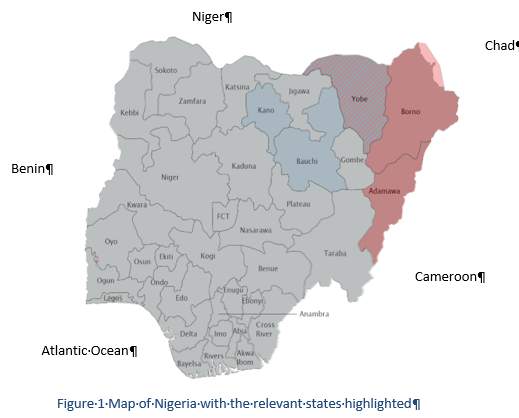
Sunna Lidda’awatiWal-Jihad (JAS) [4]and Islamic State in West African Province (ISWAP)[5]. The first known Boko Haram attack was in Yobe state, near to the border with Niger Republic in 2002 (CNN 2022). An attack on police stations in Bauchi (2009) resulted in the deaths of 39 Boko Haram insurgents, 2 police officers and 1 soldier and led to a 5-day battle in other parts of Bauchi state as well as Kano and Yobe states (in blue on Figure 1) and culminating in the city of Maiduguri in Borno state (CNN, 2022). As Boko Haram’s violent attacks gained prominence, its popularity increased (Patrick and Felix 2013).
Yusuf was arrested by the Nigerian Army (NA), handed over to the Nigerian Police Force (NPF) and later killed in NPF custody in a manner that attracted global condemnation (Onuoha & Ugwueze, 2014). This demonstrated the FGN’s adoption of physical force to ‘crush’ terrorist groups rather than using DDR strategies. As a result of Yusuf’s killing, Boko Haram’s operational methods focused on hit-and-run attacks, targeted assassinations, drive-by shootings, the use of improvised explosive devices (IEDs), suicide bombings, attacks on security formations and civilian locations (Onuoha & Ugwueze, 2014), kidnappings (Chibok and Kaduna are internationally the most well-known instances; Kimeu & Adetayo 2024), wholescale slaughter (Akinbi, 2015), stealing foodstuffs and gaining control of territory (Isine, 2016; Marama, 2016). By the end of 2020, the UN Development Programme estimated that nearly 35,000 people had been killed and more than two million others had been displaced (Reuters, 2021).
Boko Haram’s activities pose a major security risk to Nigeria and have constituted a threat to the peace and security of the northern region, particularly the northeast (where its activities are prevalent). As well as taking lives and property, this has rendered this area very unsafe (Akinbi, 2015), compromised political, socio-economic and social spheres including loss of tourist revenue in Kano and Plateau states and leaving residents of affected cities, towns and villages living in perpetual fear (Isyaku, 2013).
In Dambo’a, the area under study here, the Boko Haram problem timeline is as follows:
2012 – assassination of the former LGA Chairman, Alhaji Lawan Kabu, after a contentious local government election (Daily Trust, 2012)
May 2014 – Boko Haram takes control of several villages near Dambo’a town.
June 2014 – Boko Haram attacks and captures the Bulabulin Ngaura military post and then abducts about 60 women and girls from Kummabza, Yaga and Dagu
July 2014 – Dambo’a town overrun by insurgents who burn half the town including the Monday market (BBC News, 2014).
October 21, 2014 – Dambo’a recaptured by the NA and 35 insurgents are killed.
July 2015 – the Nigerian Military and Civilian Joint Task Force (CJTF) embarks on an operation to restore order in Borno State and the Northeast and Dambo’a becomes heavily militarized.
September 2015 – National Counter-Terrorism Strategy (NACTEST), based on a DDR Policy Framework and the National Action Plan PCVE (NAP), established as Operation Safe Corridor (OpSC).
2016 – Humanitarian assistance begins.
2017 – Gradual return to peace in the area but only five political wards habitable, some villages remain under Boko Haram control, some inhabitants have sought refuge in Internally Displaced Persons (IDP) camps in Dambo’a town, farming activities limited to a two-kilometer radius outside the town, travel requires armed forces escorts. Despite this, Dambo’a town is now considered relatively safe due to the activities of the NA.
February 2022 – the FGN inaugurates a presidential committee[6] for the repatriation of Internally Displaced Persons (IDPs) from neighboring countries as part of DDRR implementation and Borno State Government (BSG) inaugurates a committee[7] for repatriation and management of people associated with Boko Haram insurgents in collaboration with OpSC and the presidential committee.
The July 2015 CJTF operation achieved significant successes, dislodging Boko Haram, preventing them from attacking and blocking food and arms supply routes and leading to some members of the group surrendering to the military. However, lack of fulfillment of DDR preconditions such as voluntary surrender, signed peace agreements and willingness of parties in conflict to disarm meant in 2017 the FGN[8] developed a replacement Disengagement, Disassociation, Reintegration and Reconciliation (DDRR) model. Implemented in September 2015, this soft power counter-terrorism operation saw ex-Boko Haram insurgents[9] undergoing deradicalization and rehabilitation training before being handed over to the Borno, Adamawa, and Yobe (BAY) States Government (in red on Figure 1) for reintegration into their communities.
DDRR has two broad phases: Disengagement and Disassociation (managed by the FGN through OpSC) and Reintegration and Reconciliation (managed by BAY state government) depending on the nature and context of reintegration. The Borno State committee developed ‘The Borno Model’ to facilitate DDRR of ex-Boko Haram insurgents and their associates into mainstream society. It is this Borno State micro-reintegration model developed to suit the landscape of mass exits/ surrender of ex-Boko Haram insurgents and their associates which is the focus of this research. It is managed in camps or centers through a structured series of five transitional stages from reception to release or further treatment, investigation and prosecution. In order, the stages are:
Out of the Bush – surrender, defection, rescue or capture;
Transportation – movement to the center of insurgents and their associates (women, children, hostages, farmers etc.);
Identification and evaluation – insurgents are sent to OpSC centers and associates are enrolled for rehabilitation;
Center-based management – for a minimum of six months including health services, education, training and skills acquisition, deradicalization and rehabilitation;
Processing for continued management – deradicalization (rehabilitation, justice etc.) or release from Government Authority (reintegration and reunification with family and communities)
Evaluating Ex-Insurgent Reintegration Programmes
So, whilst mass surrender of Boko Haram insurgents is, on one hand, a success, it has also resulted in the Borno State Government (BSG) being overwhelmed by the demands of reintegrating ex-insurgents and their families into communities and in rising mistrust between community members and ex-insurgents which, if left unaddressed, may lead to another conflict. In total, 51,828 Boko Haram insurgents are estimated to have given themselves up to the authorities for rehabilitation and reintegration (Africa News, 2022), which according to the BSG, amounts to about 160,000 people when their associates are included. Over 70,000 have graduated from rehabilitation centers as of 15th February 2024.
Methods
The issues noted above prompted this study of possible solutions to foster peace and enhance effective reintegration of ex-Boko Haram insurgents by the BSG in Dambo’a LGA. The research was guided by the following questions:
- What is the model for the reintegration program of the ex-Boko Haram insurgents in Dambo’a LGA?
- What is the public perception of the program in Dambo’a LGA?
The study population comprised of people in IDPs camps in Dambo’a Central, reintegrated ex-Boko Haram insurgents (returnees) and residents of Dambo’a LGA aged 18 years and above. The sample consists of 400 quantitative questionnaire responses and 12 stakeholder interviews. The latter (n=8) included the representatives of MWASD, NGA, CJTF, civil society organisations, traditional and religious leaders (one Bulama and one Imam), an opinion leader and a returnee. Giving an overall research sample of 408 respondents which meets the Yamane (1964) formula for finite populations.
A combination of multi-stage cluster sampling techniques and purposive sampling methods were used (see Table 1). A mixed method approach was adopted combining questionnaires and interviews. Two sets of questionnaires were designed including open and close ended questions and administered by the researcher and his assistants using the Kobo Collect app[10]. The questionnaires could be taken in English, Marghi, Kanuri, Shuwa or Hausa to encourage free expression of opinions. Key informant interviews were also conducted, tape-recorded, transcribed, translated into English and notes made by the research assistants.
Table 1 Sampling techniques and sample size
| 5/10 political wards purposively selected | 5 wards |
| In 4 of those 5, 2 settlements/villages were selected. | 8 settlements/villages |
| 8 settlements/ villages in Dambo’a Central added due to high population concentration. | 16 settlements/villages |
| For each of those 8 locations, 12 streets were selected. | 192 streets |
| From each street, 2 households chosen | 384 households |
| In each of the 4 IDP camps, 4 respondents selected using convenient sampling | +16 IDP camp residents 400 respondents |
The quantitative data was analysed using SPSS V22 for descriptive statistics including cross-tabulations for associations between variables. The qualitative data was thematically and narratively analysed and used to triangulate with the quantitative data.
Ethical Considerations
Given the sensitive nature of the study topic, ethical considerations related to confidentiality and emotional well-being of respondents. All respondents were informed about the purpose, scope and potential impact of the research before participating and verbal consent was asked for in clear and understandable ways after checking respondents fully understood their rights. Respondents had the option to withdraw from the study at any time without consequence. Due to the sensitive nature of the study, consent was obtained verbally, ensuring respondents fully understood their rights. Personal identifiers, such as names, were removed or pseudonymized in the data to protect respondents’ identities.
Recognizing that discussions around reintegration, insurgency and community impact could evoke strong emotions or cause re-traumatisation, the questions were designed to minimize the risk of re-traumatization by avoiding invasive or highly personal inquiries. The survey and interviews were conducted in a safe, neutral environment where respondents felt comfortable (including their own homes) and participants were reminded of their right to skip questions or end the interview. The study identified referral pathways to support mechanisms for respondents and gave contact information for local mental health or counseling services in case of upset during the data collection. Given the local cultural dynamics, the research team prioritized respect for cultural norms and beliefs in interactions with both respondents and the community including understanding social protocols and tailoring communication to be respectful and non-intrusive. Local community leaders were engaged for guidance and approval as part of this process.
To foster a sense of reciprocity, respondents were informed about the benefits of the study for community development and policy enhancement. As the study was investigative it did not seek approval from government bodies or authorities to avoid interference, obstruction and alteration of the validity and outcome of the research.
Scope and Limitations of the Study
Although the sample size of 400 respondents for quantitative data and eight key informants for qualitative data provided substantial research data, it is possible that it may not fully capture the diversity of experiences and perspectives within the entire population of Dambo’a LGA. Nigeria is a polylingual country, and whilst efforts were made to translate questionnaires into local languages, it is likely that nuance was still lost in translation, potentially affecting the accuracy of the responses. Additionally, the ongoing security situation in Dambo’a LGA limited access to certain areas and individuals, potentially restricting the comprehensiveness of the data collection process. Plus, the findings of this study are specific to Dambo’a LGA and may not be generalizable to other regions affected by Boko Haram insurgency without considering local contextual differences. The study captures data at a single point in time which limits the ability to assess the long-term impact of the reintegration program on returnees and their communities. Additionally, there is a possibility of response bias, particularly in qualitative interviews, where respondents may provide socially desirable answers or withhold information due to fear of stigma or reprisal.
Findings & Analysis
363 (90.75%) of respondents were members of the host community and 37 (9.25%) were returnees (reintegrated ex-Boko Haram insurgents).
The results in Table 2 show the diverse socio-demographic characteristics of host community and reintegrated Boko Haram respondents.The host community respondents were predominantly male (54.5%), under 40 years old (54.8%), mostly married (51.0%) with tertiary or higher education histories (41.3%). Educationally, another substantial portion (32.0%) had secondary education. In terms of employment, the majority (33.6%) are civil servants (28.1%) or engaged in business (29.1%) and earn a relatively high income of 50,001 Naira or more per month (40.2%). However, more respondents earned less than 30,000 Naira monthly (48.8%) with 13.8% earning less than 10,000 Naira per month.
Table 2 Distribution of Respondents by Socio-Demographic Characteristic
| Demographic Variables | Host Community Respondents | Reintegrated ex-Boko Haram Insurgents & Associates (Returnees) Respondents | |||
| Frequency | Percent | Frequency | Percent | ||
| Sex | Female | 165 | 45.5 | 15 | 40.5 |
| Male | 198 | 54.5 | 22 | 59.5 | |
| Age | 18 -29yrs | 97 | 26.7 | 10 | 27.0 |
| 30-39yrs | 102 | 28.1 | 13 | 35.1 | |
| 40-49yrs | 73 | 20.1 | 12 | 32.4 | |
| 50-59yrs | 4 | 1.1 | 2 | 5.4 | |
| 60 and above | 87 | 24.0 | 0 | 0 | |
| Marital Status | Divorced | 1 | 0.3 | 2 | 5.4 |
| Married | 186 | 51.0 | 21 | 56.8 | |
| Single | 175 | 48.2 | 4 | 10.8 | |
| Widowed | 1 | 0.3 | 10 | 27.0 | |
| Highest Qualification | None | 1 | 0.3 | 32 | 86.5 |
| Primary | 96 | 26.5 | 3 | 8.1 | |
| Secondary | 116 | 32.0 | 1 | 2.7 | |
| Tertiary | 150 | 41.3 | 1 | 2.7 | |
| Religion | Islam | 201 | 55.4 | 22 | 59.5 |
| Christianity | 67 | 18.5 | 11 | 29.7 | |
| Traditional | 93 | 25.6 | 4 | 10.8 | |
| Others | 2 | 0.5 | 0 | 0 | |
| Ethnic Group | Marghi | 171 | 47.1 | 11 | 29.7 |
| Kanuri | 93 | 25.6 | 18 | 46.8 | |
| Hausa | 34 | 9.4 | 2 | 5.4 | |
| Bura | 18 | 5.0 | |||
| Shuwa | 17 | 4.7 | 4 | 10.8 | |
| Fulani | 12 | 3.3 | |||
| Agatu | 11 | 3.0 | |||
| Higgi | 5 | 1.4 | |||
| Others | 2 | 0.6 | 2 | 5.4 | |
| Occupation | Civil servant (incl. retired) | 122 | 33.6 | ||
| Business | 102 | 28.1 | 23 | 62.2 | |
| Farmer | 82 | 22.6 | 13 | 35.1 | |
| Student | 29 | 8.0 | |||
| Automobile mechanic | 8 | 2.2 | |||
| Social worker | 7 | 1.9 | |||
| NGO | 5 | 1.4 | |||
| Company worker | 4 | 1.1 | |||
| Other | 4 | 1.1 | 1 | 2.7 | |
| Average Monthly Income | Below 10,000 | 50 | 13.8 | 4 | 10.8 |
| 10,000-20,000 | 74 | 20.4 | 1 | 2.7 | |
| 20,001-30,000 | 53 | 14.6 | 7 | 18.9 | |
| 30,001-40,000 | 34 | 9.4 | 1 | 2.7 | |
| 40,001-50,000 | 6 | 1.7 | |||
| 50,001 and above | 146 | 40.2 | 24 | 64.9 | |
Overall, the reintegrated Boko Haram respondents, were primarily male (59.5%), aged between 30-49 years (67.5%), married (56.8%) or widowed (27.0%) (which likely reflects the impact of the conflict. They tended to have very low levels (8.6%) or no formal education (86.5%. More came from the Kanuri ethnic group (48.6%) compared to the community sample (25.6%), although the reintegration sample aligns more with the ethnic distribution in the region. The vast majority worked in business (62.2%) and farming (35.1%; 97.3% combined) and a significant proportion earned above 50,001 Nairi (64.9% compared to 40.2% of the host community sample) reflecting relatively higher income levels among the reintegrated ex-Boko Haram insurgents and, potentially, successful economic stability achieved by reintegration efforts.
Table 3 shows the host community respondents’ knowledge of the ex-Boko Haram insurgents reintegration program. Most (81.3%) were aware of reintegration program generally and reintegration of ex-Boko Haram insurgents in their community specifically (81.5%). Most of those (64.4%) believed reintegration is carried out by government officials, with some also acknowledging the involvement of the military (15.3%), traditional/religious leaders (3.7%) or a combination of these (18.0%).
Table 3 About the Model of the Reintegration Program
| Frequency | Percent | Cumulative Percent | ||
| Do you know about the ex-Boko Haram insurgents’ reintegration program? | No | 68 | 18.7 | 18.7 |
| Yes | 295 | 81.3 | 100.0 | |
| Who does the reintegration? | Government officials | 190 | 52.3 | 52.3 |
| Military | 45 | 12.4 | 64.7 | |
| Tradition/Religious leaders | 11 | 3.0 | 67.7 | |
| All of the above | 53 | 14.6 | 82.3 | |
| I don’t Know | 64 | 17.6 | 100.0 | |
| Do you know of activities or interventions related to the reintegration of ex-Boko Haram insurgents in your community? | No | 67 | 18.5 | 18.5 |
| Yes | 296 | 81.5 | 100.0 | |
Figure 2 Host Community Members’ Perception of the Program[1]
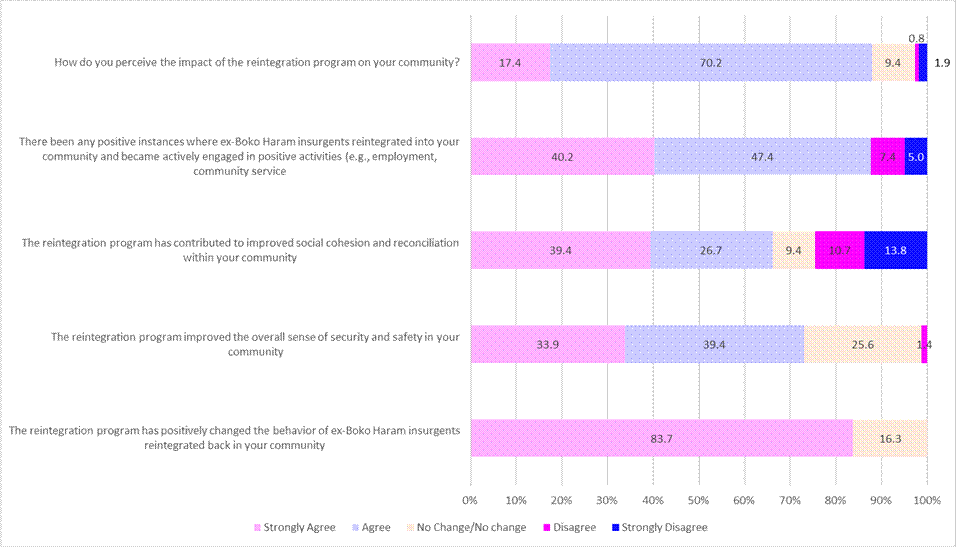
Figure 2 presents host community respondents’ perceptions and experiences of the reintegration of ex-Boko Haram insurgents. 87.6% of respondents viewed the reintegration program’s impact on their community as either highly or somewhat positive and 83.7% of respondents believed the reintegration program generally had positively changed the behavior of ex-Boko Haram insurgents with 87.6% having seen positive instances of reintegrated insurgents engaging in community activities. Most also thought there had been either significant or slight improvement in security and safety due to the reintegration program (73.3%). However, 25.6% felt there had been no change and 1.4% perceived a decline. A smaller majority (66.1%) agreed or strongly agreed that the program had improved social cohesion and reconciliation, although 24.5% disagreed or strongly disagreed with this.
Figure 3 shows the reintegrated ex-Boko Haram respondents’ views on the reintegration program before engagement in it and shows that whilst some were fearful or skeptical, the majority felt they had nowhere else to go.
Figure 3 What ex-insurgents thought about the reintegration program before participation
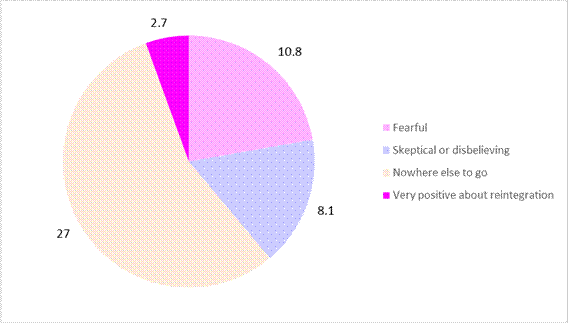
Figure 4 Motivation to participate in the reintegration program (equals more than 100 due to multiple answers being possible)
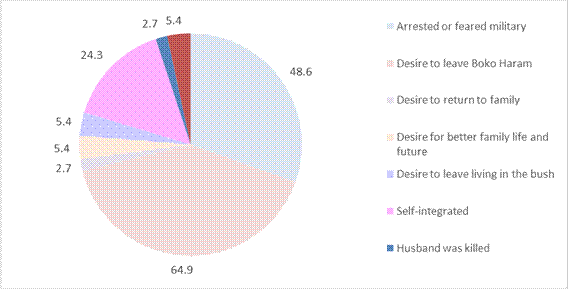
Figure 4 shows the motivations of Boko Haram insurgents to take part in the program, with most respondents (64.9%) motivated by a desire to leave Boko Haram and a further 48.6% forced into the program through arrest. 8.1% were motivated by family factors.
The majority of reintegrated respondents reported that their reintegration program lasted more than a year (51.4%), followed by 6-9 months (35.1%) and just 13.5% said it took 3 months. Indeed, in interview, the NA representative highlighted that “the program takes about six months to a year for full reintegration, involving several stages like deradicalization or rehabilitation, vocational training, and community reintegration.” In terms of what the reintegration program involved, 59.5% identified vocational training, 13.5% some form of psychosocial support or counselling (including spiritual), 5.4% medical help, 5.4% education and 2.7% reconciliation work. Only 13.5% identified community dialogue and reconciliation with their community before reintegration. In the interviews, the power of psychosocial support was emphasized by one CSO participant:
We focus on psychosocial support, helping returnees cope with their past and integrate into society. Our counselling sessions are tailored to address their unique needs. Which resulted in a returnee, who had struggled with severe trauma, gradually open up during our counselling sessions. Today, he volunteers with our organization, helping others in the camp.
The central role of religious guidance was also emphasized in the interviews. The Bulama stressed the importance of traditional ceremonies in welcoming ex-Boko Haram insurgents back into the community and another said:
As an Imam, I emphasize forgiveness and the importance of giving returnees a second chance. My mosque provides spiritual guidance and support to both returnees and the community. There was a young man who, after leaving Boko Haram, sought solace in our mosque. Through regular counselling and spiritual guidance, he found peace and is now a respected member of our community.
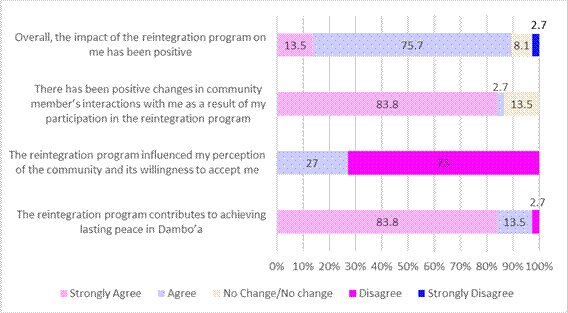
Figure 5 shows the reintegrated ex-Boko Haram insurgents’ perceptions of the reintegration program. Most respondents (64.9%) were motivated by a desire to leave Boko Haram with 10.4% forced into the program through arrest and 8.1% motivated by family factors. 97.3% thought the program strongly or somewhat contributed to peace in the area, however only 73.0% thought participation in the program had changed their view of the willingness of the community to accept them.
Figure 5 Returnees perception of the program’s impact
Discussion
The results from 400 individuals, (37 reintegrated ex-Boko Haram insurgents and 363 host community members) show that host community members are largely aware of the reintegration program both generally (81.3%) and in terms of local activity (81.5%).
However, most ex-insurgents were motivated by a desire to leave Boko Haram (64.9%), the bush (5.4%) or for family-related factors (8.1%). 13.5% were motivated by fear, arrest or bereavement. Many ex-Boko Haram insurgents reported acquiring new skills, such as tailoring, through the program (37.8%) and 89.3% thought that believe the program had positively impacted their lives. Some of the respondents and interviewees focused on economic-rehabilitation stories in their interviews.
I learned a lot from the trainings and I’m now living peacefully and earning my living. (Ex-Boko Haram insurgent)
By providing ex-Boko Haram insurgents with vocational training and psychological support, we aim to transform them into productive members of society […] one of the returnees, whom I personally escorted back to his village, is now a successful farmer. His transformation is a testimony to the program’s impact and the collective efforts of all stakeholders involved. (NA representative)
I recall a young woman who, after leaving Boko Haram, received tailoring training through our program. Today, she runs a small business and employs others in her community (MWASD representative)
We had a returnee who, after completing our vocational training, started a successful carpentry business. His success story encourages other returnees to pursue similar paths. (CSO representative)
Indeed, the latter also stated that “our organization provides vocational training and educational support to returnees in the IDP camps and communities. We believe that equipping them with skills is essential for their successful reintegration”.
Both 73.3% of host community members and 83.8% of ex-insurgents through the program contributed to peace in Dambo’a. 83.7% of host community members and 89.2% of ex-insurgents thought the program had had a positive impact on the insurgents. Despite this, 83.8% of the ex-Boko Haram insurgents reported experiencing stigmatization from the community. This is not surprising given the mixed feelings about the reintegration process from host community members and interviewees also commented on this:
Our role is to advocate for returnees’ rights and provide them with legal support. We work to ensure they are treated fairly and have access to necessary resources; we successfully advocated for a returnee who faced discrimination in the community. His case led to increased awareness and better treatment of returnees. (CSO representative)
Community involvement and fostering community acceptance of returnees is crucial but the needs and concerns of the communities should also be considered and addressed in order to do away with stigma. I remember a community meeting where we discussed the reintegration of a former insurgent. The community’s acceptance and support for him marked a significant step towards peace and unity. (Opinion Leader)
Ex-Boko Haram insurgents, host community members and interviewees highlighted gaps in the program including a lack of after-care, financial resource, community dialogue and consistent monitoring and evaluation. In the interviews, stigmatization
Conclusion and recommendations
This study examined the reintegration of ex-Boko Haram insurgents in Dambo’a LGA, Borno State, focusing on both the experiences of the returnees and the perceptions of the host community. It’s importance lies in it’s having been able to overcome the significant challenges in this (subject and geographic) area due to deep-seated mistrust, stigma and socio-economic disruption from long-term conflict with Boko Haram. Reintegration is a complex and multifaceted process, and the existing program has been largely effective in providing vocational training and psychosocial support, helping returnees rebuild their lives and reintegrate into communities. However, lasting stigmatisation from the community, lack of financial resources, and insufficient after-care services are obstacles that may undermine the long-term success of reintegration efforts. The host community, while generally supportive of the reintegration program, harbors concerns about the adequacy of support provided to both returnees and the broader community. This underscores the need for a more comprehensive approach that not only focuses on returnees but also addresses the socio-economic needs of the host community to foster greater acceptance and sustainable peace.
This study is significant as it reports on new empirical data and insights as a reference point for future studies, particularly for those exploring reintegration and counter-extremism in similar contexts. The results from the study also highlights the specific challenges and success factors in the reintegration process, allowing policymakers to create targeted strategies and actionable steps to bridge trust gaps or enhance local cooperation. Insights can also be directly applied to policies on PCVE to shape practical programs in deradicalization and rehabilitation, which are essential for local and regional peacebuilding.
Based on the findings of this study, the following recommendations are proposed:
1. Enhance Community Engagement and Sensitization: such as community dialogues, conflict resolution workshops and sensitization campaigns that emphasize the importance of reconciliation and the collective benefits of reintegration to reduce stigma and discrimination against ex-insurgents.
2. Strengthen Economic Support: To address the economic challenges faced by both returnees and the host community through providing seed funding, facilitating access to microcredit and offering business development services to help returnees and community members build sustainable livelihoods.
3. Provide Comprehensive After-Care Services: to ensure returnees continue to receive the support they need to successfully reintegrate and to monitor their progress over time, ongoing psychosocial support, mentoring and follow-up evaluations should be provided.
4. Improve Monitoring and Evaluation: A more systematic approach to monitoring and evaluating of the reintegration program is needed with regular assessment of the program’s impact on both returnees and the host community focusing on enhancing the program’s design and implementation, identifying areas for improvement and gaps in the service.
6. Address the Root Causes of Radicalisation: Underlying factors, such as poverty, lack of education and political marginalization must be addressed to reduce the likelihood of individuals (re)joining extremist groups and to promote lasting peace and stability in the region.
7. Ensure Future Studies: there is a need for research which focuses on longitudinal tracking of reintegration outcomes to provide insights into the sustainability of reintegration efforts and the evolving challenges faced by returnees over time; comparative analysis of reintegration programs across different states, regions and countries affected by insurgency could offer valuable insight into best practice and areas for improvement and deeper investigation of the role of psychosocial support in the reintegration process would help understanding of how different types of psychosocial interventions affect returnees’ mental health and their ability to reintegrate.
Reference List
Akinbi, J. (2015). Examining Boko Haram Insurgency in Northern Nigeria and the Quest for a Permanent Resolution of the Crisis. Global Journal of Arts, Humanities and Social Sciences, 3(8), 32–45.
Alpaslan, Ö. (2012). A re-conceptualisation of ex-combatant reintegration: ‘social reintegration’ approach. Conflict, Security & Development, 12(1), 51-73. DOI: 10.1080/14678802.2012.667661
Bell, K. (2015). Looking Outward: Enhancing Australia’s Deradicalisation and Disengagement Programs. Security Challenges, 11(2), 1-20.
Bukarti, A. B. & Bryson, R. (2019). Dealing with Boko Haram Defectors in the Lake Chad Basin: Lessons from Nigeria. Tony Blair Institute for Global Chage. Published at http://institute.global/insight/co-existence/dealing-boko-haram-defectors-lake-chad-basin-lessons-nigeria on April 30 2019
Braithwaite, J. (1989). Crime, Shame and Reintegration. Cambridge: Cambridge University Press.
Campbell, J. (2014). United States Policy to Counter Nigeria’s Boko Haram. Council for Preventive Action, Council Special Report No. 70, November 2014.
Carrabine, E., Cox, P., Lee, M., Plummer, K., & South, N. (2009). Criminology a Sociological Introduction. London and New York: Routledge Taylor & Francis Group www.eBookstore.taudf.co.uk
Chikadzi, V. (2017). Challenges facing ex-offenders when reintegrating into mainstream society in Gauteng, South Africa. Social Work, 53(2), DOI: 10.15270/53-2-569
Christina, N., Lara, N., Eva, E., Fulco, D., & Bibi, G., (2018). It Takes A Village: An Action Agenda on the Role of Civil Society in the Rehabilitation and Reintegration of Those Associated With and Affected by Violent Extremism, report, Global Center on Cooperative Security, https://www.icct.nl/publication/it-takes-village-action-agenda-role-civil-society-rehabilitation-and-reintegration
Clinard, M. B. & Meier, R. F. (2008). Sociology of Deviant Behavior. Thirteenth edition. United States:Thomson Higher Education, 10 Davis Drive Belmont, CA 94002-3098 USA. ISBN-13: 978-0-495-09335-0
Colletta, N., M. Kostner, I. & Wiederhofer, I. (1996). Case Studies in War-to-Peace Transition: The Demobilization and Reintegration of Ex-Combatants in Ethiopia, Namibia and Uganda. World Bank, Washington, DC.
Cornish, D. B., & Clarke, R. V. G., (1986). The Reasoning Criminal: Rational Choice Perspectives on Offending. (eds.) Berlin: Springer-Verlag
CNN Editorial Research, 2022 retrieved: www.edition.cnn.com/2014/06/09/world/boko-haram-fast-facts/index.html
Coulouris, R. (2019). The roles of communities in the effective reintegration of violent extremist offenders in the lake chad basin countries. A research study submitted to Johns Hopkins University in conformity with the requirements for the degree of Master of Arts in Global Security Studies, Baltimore, Maryland August, 2019
Clutterbuck, L, (2015). Deradicalisation Programs and Counterterrorism: A Perspective on the Challenges and Benefits Middle East Institute Accessed 20th February 2025 from https://www.mei.edu/sites/default/files/Clutterbuck.pdf
Ehiane, S. O., (2019). De-radicalisation and Disengagement of the Extremist Group in Africa: The Nigerian Experience. Journal of African Foreign Affairs. Volume 6
Garland, D. (1985). Punishment and Welfare, Aldershot: Gower
Gear, S. (2002). Wishing us away: challenges facing ex-combatants in the ‘new’ South Africa. Violence and Transition Series, Vol. 8. Available from http://www.csvr.org.za/wits/papers/papvtp8f.htm [Accessed 20 July 2011].
Gunaratna, R. (2013). Revisiting challenges to de-radicalization and community engagement. Counter Terrorist Trends and Analyses, 5(8), 3-6. Retrieved August 13, 2020, from www.jstor.org/stable/26351171
Holmer, G. & Shtuni, A. (2017). Returning foreign fighters and the reintegration imperative. United States Institute of Peace: Special Report.
International Peace Institute. (2010). A New Approach? Deradicalization Programs and Counterterrorism Accessed 10th February 2025 from https://www.ipinst.org/wp-content/uploads/publications/a_new_approach_epub.pdf
Isine, I. (2016). ‘Reclaiming Territories Not End to Boko Haram, Experts Warn’. Premium Times. Accessed on 19th July 2016 from http://www.premiumtimesng.com/news/top-news/178925-reclaiming-territories-not-end-to-boko-haram-experts-warn.html
Isyaku, A. (2013). Terrorism: A New Challenge to Nigeria Stability in the 21st Century. International Affairs and Global Strategy, 12 (1): 16–24.
Juma, M. N. & Githigaro, J. M. (2021). Communities’ Perceptions of Reintegration of Al-Shabaab Returnees in Mombasa and Kwale Counties, Kenya. Journal for Deradicalization, Spring 2021 Nr. 26 ISSN: 2363-9849.
Karazsia, Z. (2015). Evaluating the “Success” of Disarmament, Demobilization, and Reintegration Programs: The Case of Congo-Brazzaville. Journal of Interdisciplinary Conflict Science. Volume 1 Florida international University
Kimeu, C. & Adetayo, O. (2024) Ten years on from Chibok, what happened to the 276 Nigerian girls snatched from their school? The Guardian 11th April 2024 Retrieved from https://www.theguardian.com/global-development/2024/apr/11/nigeria-chibok-boko-haram-girls-school-abductions-islamist-militants-borno-yobe-katsina-kaduna
Kingma, K. (1997). Demobilization of combatants after civil wars in Africa and their reintegration into civilian life. Policy sciences, 30 (3), 151_165
Krippahl, C. (2022). Nigeria: Reintegrating ex-Boko Haram fighters. DW www.dw.com
Marama, N. (2016). ‘Boko Haram Kills 13 takes over five Borno communities’ Accessed on June 7th 2016 from http://www.vanguardngr.com/2016/05/boko-haram-kills-13-takes-five-borno-communites/
Nilsson, A. (2005). Reintegrating Ex-Combatants in Post-Conflict Societies. Published by Sida. Printed by Edita Communication AB, 2005. ISBN 91 586 8307-0 www.sida.se/publications
Onuoha, J. & Ugwueze, M. (2014). United States Security Strategy and the Management of Boko Haram Crisis in Nigeria. Global Journal of Arts Humanities and Social Sciences, 2 (3): 22–43.
Otu, N. (2004). The Police Service and Liability Insurance; Responsible Policy. In International Journal of Police Science and Management. Vol.8, No.4
Owonikoko, S. B. (2022). “Take them to Government House or Aso Rock”: Community receptivity to reintegration of Operation Safe Corridor’s deradicalised Ex-Boko Haram members in Northeastern Nigeria, Cogent Social Sciences, 8:1, 2015884, DOI:10.1080/23311886.2021.2015884
Ozerdem, A. (2002). Disarmament, demobilisation and reintegration of former combatants in Afghanistan: lessons learned from a cross-cultural perspective. Third world quarterly, 23 (5), 961_975.
Patrick, O. and Felix, O. (2013). Effects of Boko Haram on School Attendance in Northern Nigeria. British Journal of Education, 1 (2): 1–9.
Reuters (2021) Northeast Nigeria insurgency has killed almost 350,000 – UN (24th June 2021). Retrieved from https://www.reuters.com/world/africa/northeast-nigeria-insurgency-has-killed-almost-350000-un-2021-06-24/.
Richard, B. & Alpaslan, Ö. (2013). How to Assess Social Reintegration of Ex-Combatants, Journal of Intervention and Statebuilding, 7:4, 453-475, DOI:10.1080/17502977.2012.727537 link to this article: http://dx.doi.org/10.1080/17502977.2012.727537
Saïbou, I. & Nadine, M. (2019). Reintegrating Former Boko Haram Associates Perspectives From Far North Region in Cameroon. Global Center on Cooperative Security (2019) Stable URL: http://www.jstor.com/stable/resrep20331
Siegel, L. J. & Worrall, J. L. (2018). Introduction to Criminal Justice, Sixteenth Edition. Cengage Learning 20 Channel Center Street Boston, MA 02210 USA. ISBN: 978-305-96994-O
Siegel, L. J. (2004). Criminology: Theories, Pattern and Typologies. (8th edition). USA: Thomason learning Inc.
Willybeez (2017) Map of Nigerian States with names. Retrieved from https://en.wikipedia.org/wiki/File:Map_of_Nigerian_States_with_names.png. Shared under Creative Commons Attribution 4.0 License.
Yamane, T. (1964). Statistics: an Introductory Analysis, New York, Harper & Row Publishers 3rd Ed.
[1] Dambo’a is one of the 27 Local Government Areas (LGAs) of Borno State located in the southern part of the state in northeastern Nigeria. It has an area of 6,219 km² and a population of 233,200 (NPC, 2022), more than half of which has been internally displaced (UNOCHA, 2022). The majority of the population is from the Marghi ethnic group, while Kanuri is the minority. English is the official language, although Marghi, Kanuri, Shuwa, and Hausa are widely spoken.
[2] Reintegration is defined as “the process [whereby] former combatants, their families and other displaced persons are assimilated into the social and economic life of (civilian) communities” (Ozerdem, 2002:962) and “a social and economic process with an open time frame, primarily taking place in communities at the local level [where former combatants]. acquire civilian status and gain sustainable employment and income” (United Nations 2014).
[3] The term ‘Boko Haram’ is literally a combination of Hausa “Western education” and Arabic “haram” which means “forbidden”; loosely interpreted as “Western education is forbidden”.
[4] “People committed to the propagation of the Prophet’s Teachings and a war for the course of God Almighty”
[5] Formerly called the Taliban, but known as Yusufiyya after the founder of the group Muhammad Yusuf, this group is called Boko Haram by residents because of their call to (violently) reject Westernised education and democratic systems of government and supplant them with a version of Islamic government and education.
[6] Consisting of the Vice President, ministries, security agencies, the Refugee Commission and the National Emergency Management Agency (NEMA) to work in collaboration with OpSC and BAY States Government.
[7] Co-chaired by the Deputy Governor and Commissioner of Justice and coordinated through the Ministry of Women’s Affairs and Social Development (MWASD), with representation from the Borno State House of Assembly (BOHA), military and security agencies; religious and traditional leaders, civil society organizations (CSOs), Nigeria Labor Congress (NLC) and Nigeria Union of Journalists (NUJ).
[8] Through the Office of the National Security Adviser (ONSA) with technical support from the International Organization for Migration (IOM).
[9] Former Boko Haram combatants that surrendered/repented and underwent deradicalization (i.e. rehabilitation, re-socialization and renormalization back to their state of wellbeing before joining Boko Haram.
[10] Kobo Collect is a secure data collection and storage application which prevented unauthorized access to sensitive data.
The information is not easily readable.