| Chaplaincy
Emmaus encounter
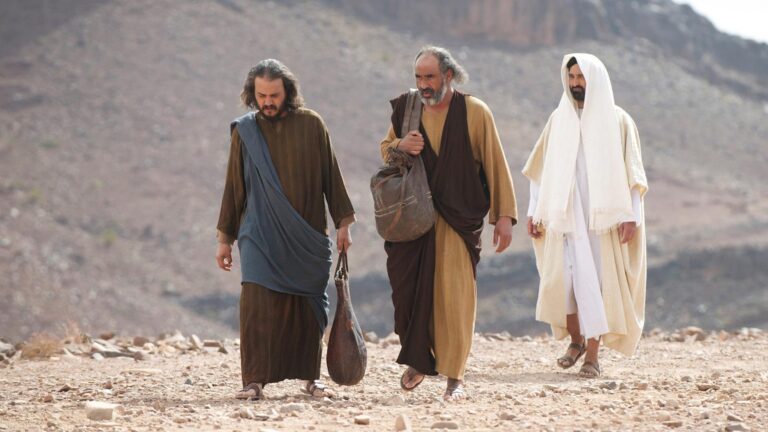
Now on that same day two of the disciples were going to a village called Emmaus, about seven miles from Jerusalem, and talking with each other about all these things that had happened. While they were talking and discussing, Jesus himself came near and went with them, but their eyes were kept from recognizing him. And he said to them, “What are you discussing with each other while you walk along?”
They stood still, looking sad. Then one of them, whose name was Cleopas, answered him, “Are you the only stranger in Jerusalem who does not know the things that have taken place there in these days?”
He asked them, “What things?”
They replied, “The things about Jesus of Nazareth, who was a prophet mighty in deed and word before God and all the people, and how our chief priests and leaders handed him over to be condemned to death and crucified him. But we had hoped that he was the one to redeem Israel. Yes, and besides all this, it is now the third day since these things took place. Moreover, some women of our group astounded us. They were at the tomb early this morning, and when they did not find his body there they came back and told us that they had indeed seen a vision of angels who said that he was alive. Some of those who were with us went to the tomb and found it just as the women had said, but they did not see him.”
Then he said to them, “Oh, how foolish you are and how slow of heart to believe all that the prophets have declared! Was it not necessary that the Messiah should suffer these things and then enter into his glory?” Then beginning with Moses and all the prophets, he interpreted to them the things about himself in all the scriptures.
As they came near the village to which they were going, he walked ahead as if he were going on. But they urged him strongly, saying, “Stay with us, because it is almost evening and the day is now nearly over.” So he went in to stay with them. When he was at the table with them, he took bread, blessed and broke it, and gave it to them. Then their eyes were opened, and they recognized him, and he vanished from their sight. They said to each other, “Were not our hearts burning within us while he was talking to us on the road, while he was opening the scriptures to us?”
The resurrection of Jesus is the hardest part of the Christian Gospel to believe. Why do you think this is?
Perhaps it is because, as an event in itself, it makes only limited sense. However, within the context of love, sacrifice, prophecy, memory and hope, it draws us into a pattern of God’s relationship with the world.
The story of the Road to Emmaus is an encounter rather than an event and as such, invites us to reflect on the story as a whole, on our participation in the world created and loved by God.
There are three things I would like you to notice;
- Jesus himself came near and went with them, but their eyes were kept from recognizing him.
Sometimes we do not look to see the world as God sees it and we miss the chance relationship, the conversation that helps us articulate what we believe. This might be the meeting point between ourselves and something other that has an integrity of its own, that can’t be understood as something we control or manipulate or that makes us more powerful. It presents us with a reality that comes near to us and journeys with us.
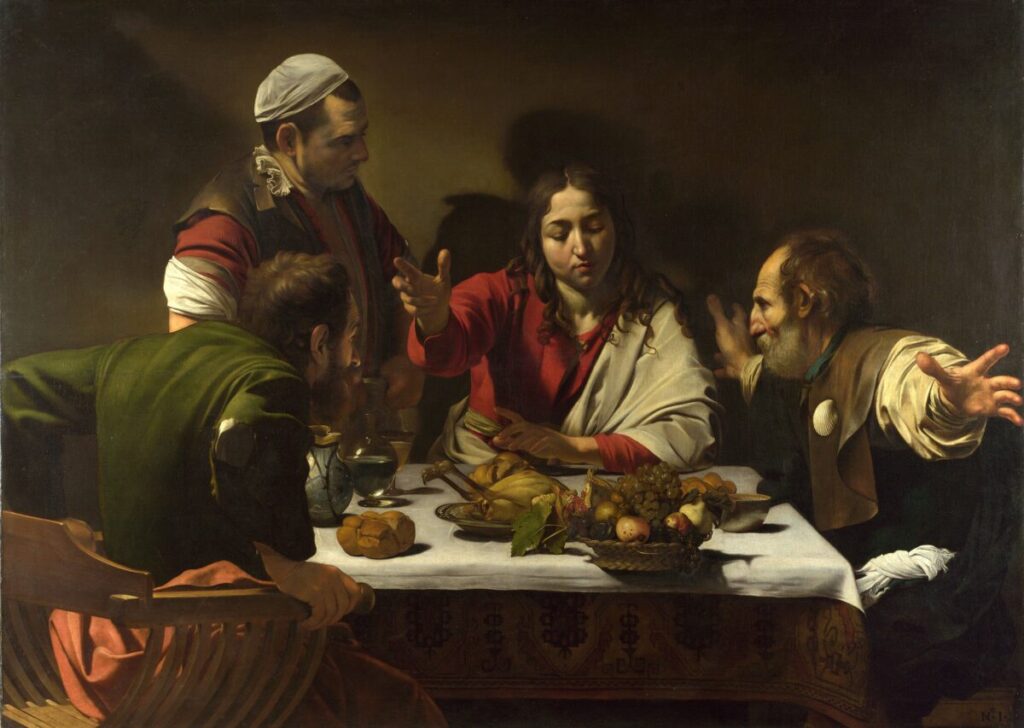
- When he was at the table with them, he took bread, blessed and broke it, and gave it to them. Then their eyes were opened, and they recognized him.
Sometimes we become aware of something that resonates deep within us and speaks to something empty and lost within us. We ‘see’ more clearly. It might start with familiar, longed for words. We might recognise it in the actions of another person which remind us that we are cared for and loved. It might simply be the presence of someone who sees us for who we are and still wants to be alongside us.
- Then their eyes were opened, and they recognized him, and he vanished from their sight.
When we have encounters like this which resonate with something deep inside of our soul, we might try to hold onto it, invest our hope in it, hold onto it tightly to prevent it slipping away. The encounter might offer safety, security, certainty and we want to make that a permanent feature of our understanding. Like any longed for holiday, we have to let it pass, we have to adjust to a new reality trusting that we are changed by an encounter with God which, in itself, makes us strong enough to engage with the world, with people and with God in a state of hope and trust.
We might even find ourselves, like those on the road to Emmaus, approaching something at the end of ourselves and at the start of something more divine.